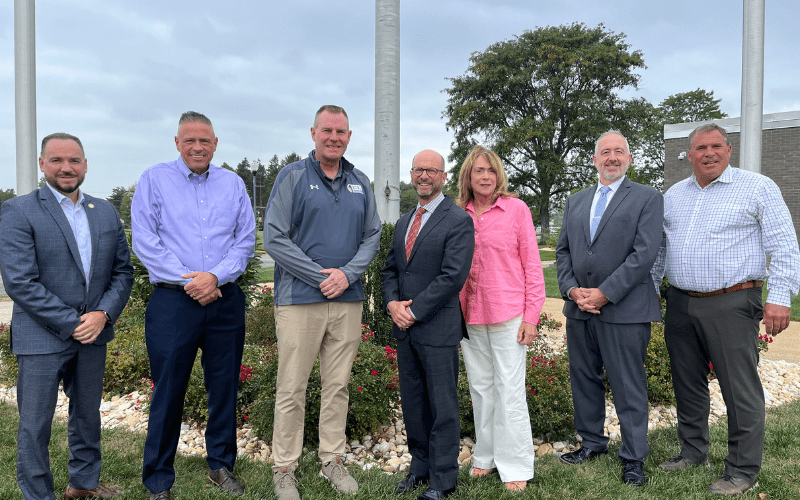
The New Jersey Council of County Vocational-Technical Schools (NJCCVTS) elected new officers and an executive committee to a two-year term to govern the Council. Among new leaders are President Gus Modla (pictured center, left), superintendent of Sussex County Technical School, and President-Elect John R. Swain (pictured far right), superintendent of Salem County Vocational Technical School District. Also pictured from left to right are Executive Committee member Jorge Diaz, superintendent of Middlesex County Magnet Schools; Secretary Todd Bonsall, superintendent of Hunterdon County Vocational School District; Dr. Howard Lerner, (pictured center, right) superintendent of Bergen County Technical Schools and past president; Treasurer Karen Homiek, superintendent of Ocean County Vocational Technical School; and Dr. James Pederesen, superintendent of Essex County Schools of Technology and past president.
The New Jersey Council of County Vocational-Technical Schools (NJCCVTS) has announced a newly elected slate of officers to guide career and technical education (CTE) across the state’s 21 county-based schools. Gus Modla, superintendent of Sussex County Technical School, is the new president and will serve a two-year term.
Modla has been both superintendent and principal of Sussex County Technical School since 2013. He began his career in education as a social studies teacher before moving into administration. Throughout his career, he also held various coaching positions, which further shaped his leadership style and the value he places on teamwork.
Modla is well-suited for the role of NJCCCVTS president, which requires a collaborative mindset to bring the superintendents from all 21 county vocational-technical schools together to work toward common goals on behalf of their districts, the 35,000+ students they collectively serve and statewide employers in need of skilled professionals.
“As president, my goal is to continue advancing the mission of New Jersey’s county vocational-technical schools by promoting high-quality career and technical education that meets the evolving workforce needs of our state,” said Modla. “Together, we will strengthen collaboration among the 21 county vocational school districts, share best practices and ensure our programs continue to prepare students for success in both college and career pathways.”
The full NJCCVTS slate of officers, which was elected by
Council members who lead New Jersey’s county vocational-technical schools, includes:
- President – Gus Modla, superintendent of Sussex County Technical School
- President-Elect – John R. Swain, superintendent of Salem County Vocational Technical School District
- Vice President – Gwendolyn S. Ryan, superintendent of Union County Vocational-Technical Schools
- Treasurer – Karen Homiek, superintendent of Ocean County Vocational Technical School
- Secretary – Todd Bonsall, superintendent of Hunterdon County Vocational School District
For more information about the NJCCVTS and the range of career programs offered across members’ county vocational-technical schools, visit https://careertechnj.org.